





Sagar Shrestha

Sagar Shrestha

PhD in CS | Oregon State University

Ex-Intern at Amazon Science & Samsung Research

Jan 2021 - Dec 2025

PhD in CS at Oregon State University advised by Xiao Fu. Research in unsupervised domain translation, generative models, and multiview/multimodal learning.

Jul 2025 - Oct 2025

Applied Scientist Intern at Amazon. Graph semi-supervised learning for account takeover detection.

Mar 2025 - Jun 2025

Computer Vision Research Intern at Samsung Research America. Research in personalization of text to image generative models with Gopal Sharma, Luowei Zhou, and Suren Kumar.

Jan 2021 - Mar 2023

MS in CS at OSU (advisor: Xiao Fu). Research in ML/DL/RL for sensing, communication and federated learning, funded by Intel and NSF (MLWiNS).

Nov 2016 - Dec 2020

Co‑founded Paaila Technology in Nepal. Led development of waiter robots.

Sept 2012 - Sep 2016

BE in ECE at IOE, Pulchowk Campus, Tribhuvan University, Nepal.

Nov 2013 - Sep 2016

Team Member of Robotics Club. Participated in ABU Robocon 2015 & 2016. Our team won multiple awards.

Select Publications

Diversified Flow Matching 3D

Diversified Flow Matching with Translation Identifiability

Sagar Shrestha, Xiao Fu

International Conference on Machine Learning (ICML) 2025

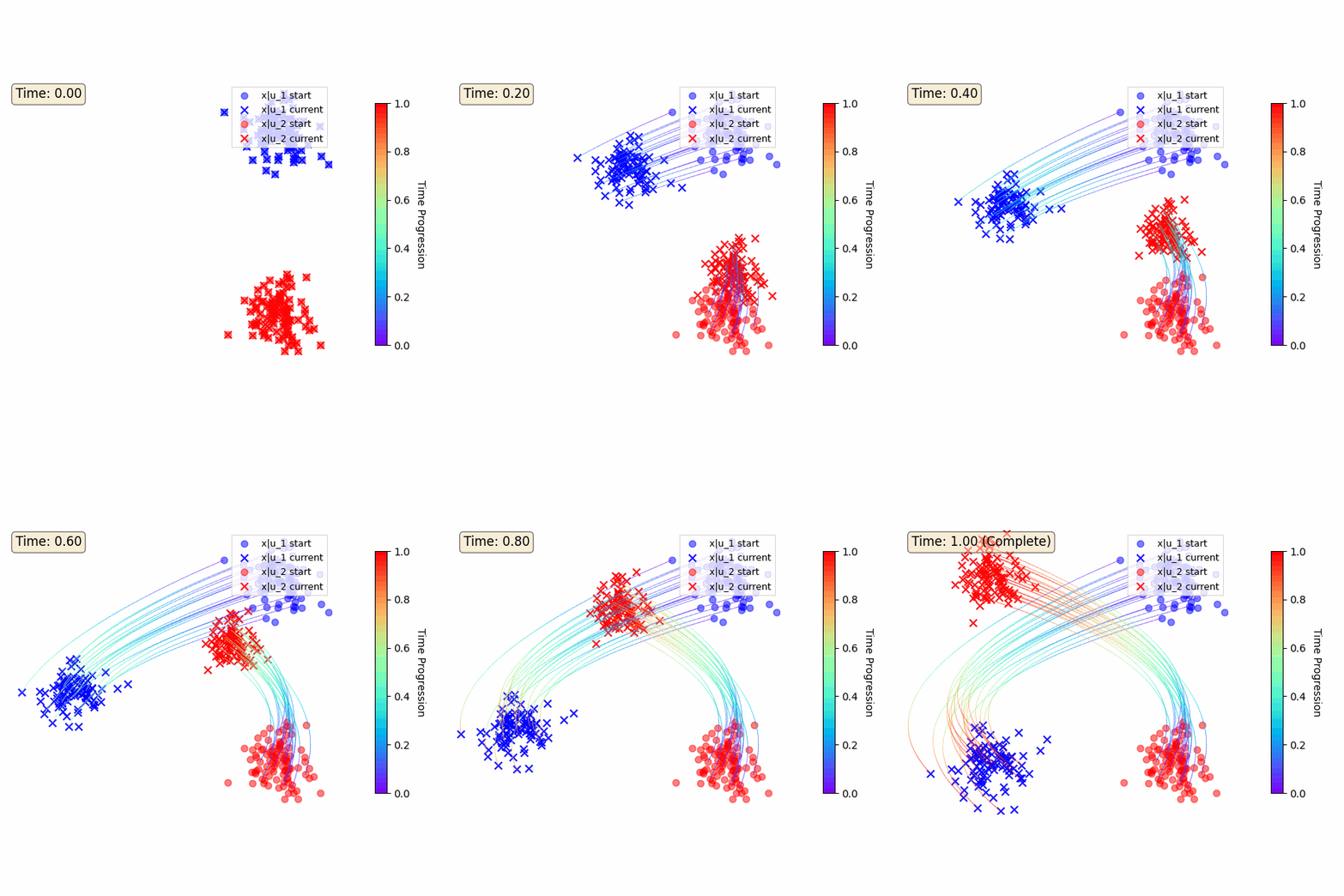
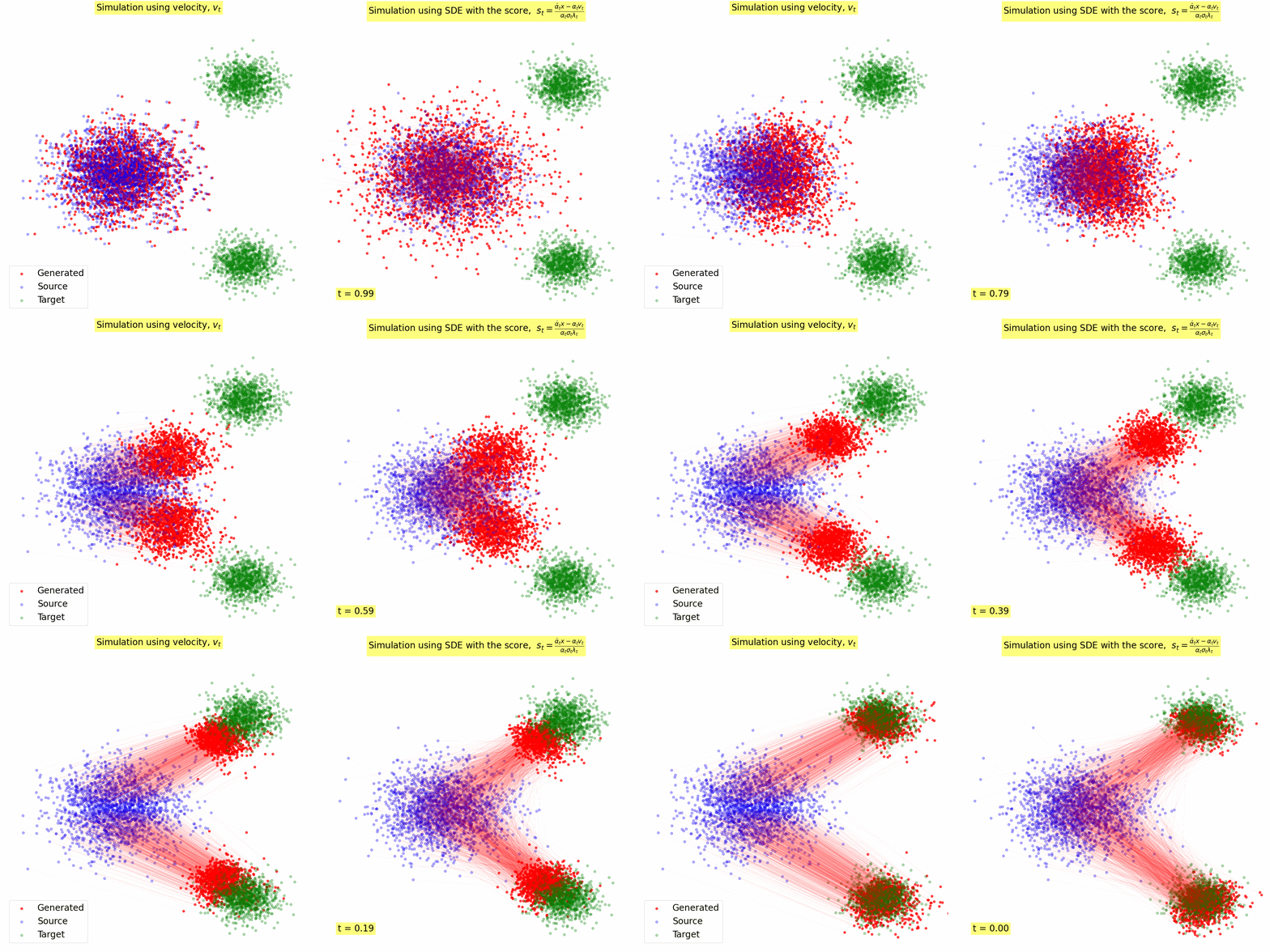
Diversified distribution matching (DDM) finds a unified translation function mapping a diverse collection of conditional source distributions to their target counterparts. DDM was proposed to resolve content misalignment issues in unpaired domain translation, achieving translation identifiability. However, DDM has only been implemented using GANs due to its constraints on the translation function. This work introduces diversified flow matching (DFM), an ODE-based framework for DDM.

Content-Style Learning

Content-Style Learning from Unaligned Domains: Identifiability under Unknown Latent Dimensions

Sagar Shrestha, Xiao Fu

International Conference on Learning Representations (ICLR) 2025

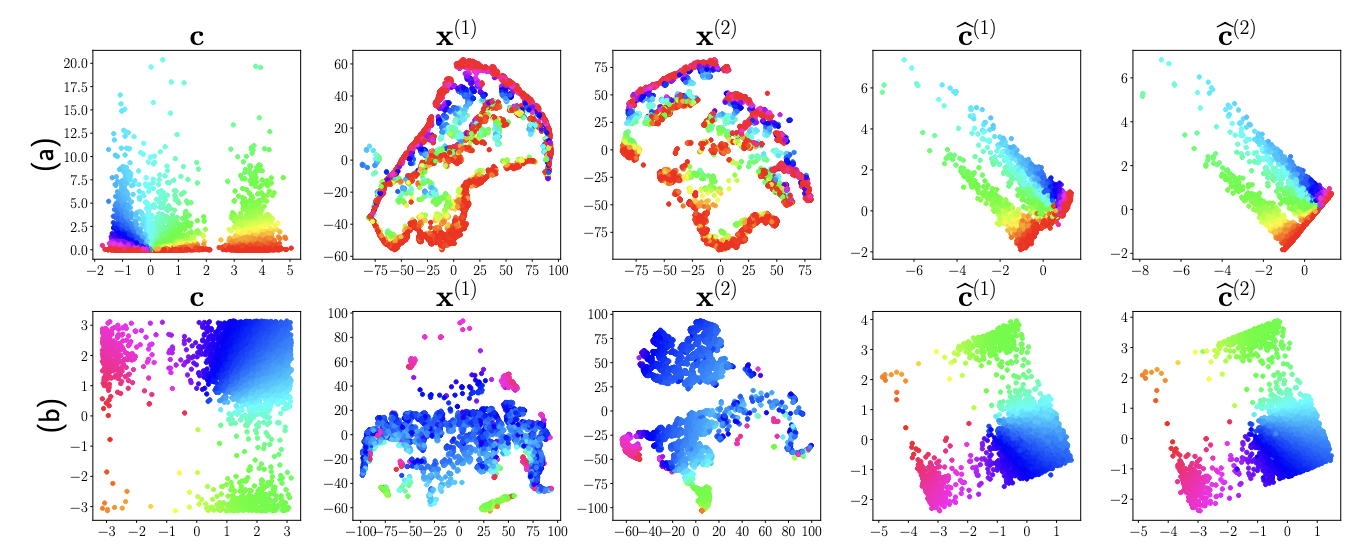
This work develops a novel framework for identifying latent content and style variables from unaligned multi-domain data, a crucial challenge in domain translation and generative modeling. We introduce cross-domain latent distribution matching (LDM) along with sparsity constraint to identify the latent content and style variables without latent dimension information.

Shared Component Analysis

Identifiable Shared Component Analysis of Unpaired Multimodal Mixtures

Subash Timilsina, Sagar Shrestha, Xiao Fu

Neural Information Processing Systems (NeurIPS) 2024

This work investigates shared component identifiability from multi-modal linear mixtures with unaligned cross-modality samples, extending beyond previous research on aligned samples. We propose a distribution divergence minimization-based loss and derive sufficient conditions for shared component identifiability.

Identifiable Domain Translation

Towards Identifiable Unsupervised Domain Translation: A Diversified Distribution Matching Approach

Sagar Shrestha, Xiao Fu

International Conference on Learning Representations (ICLR) 2024

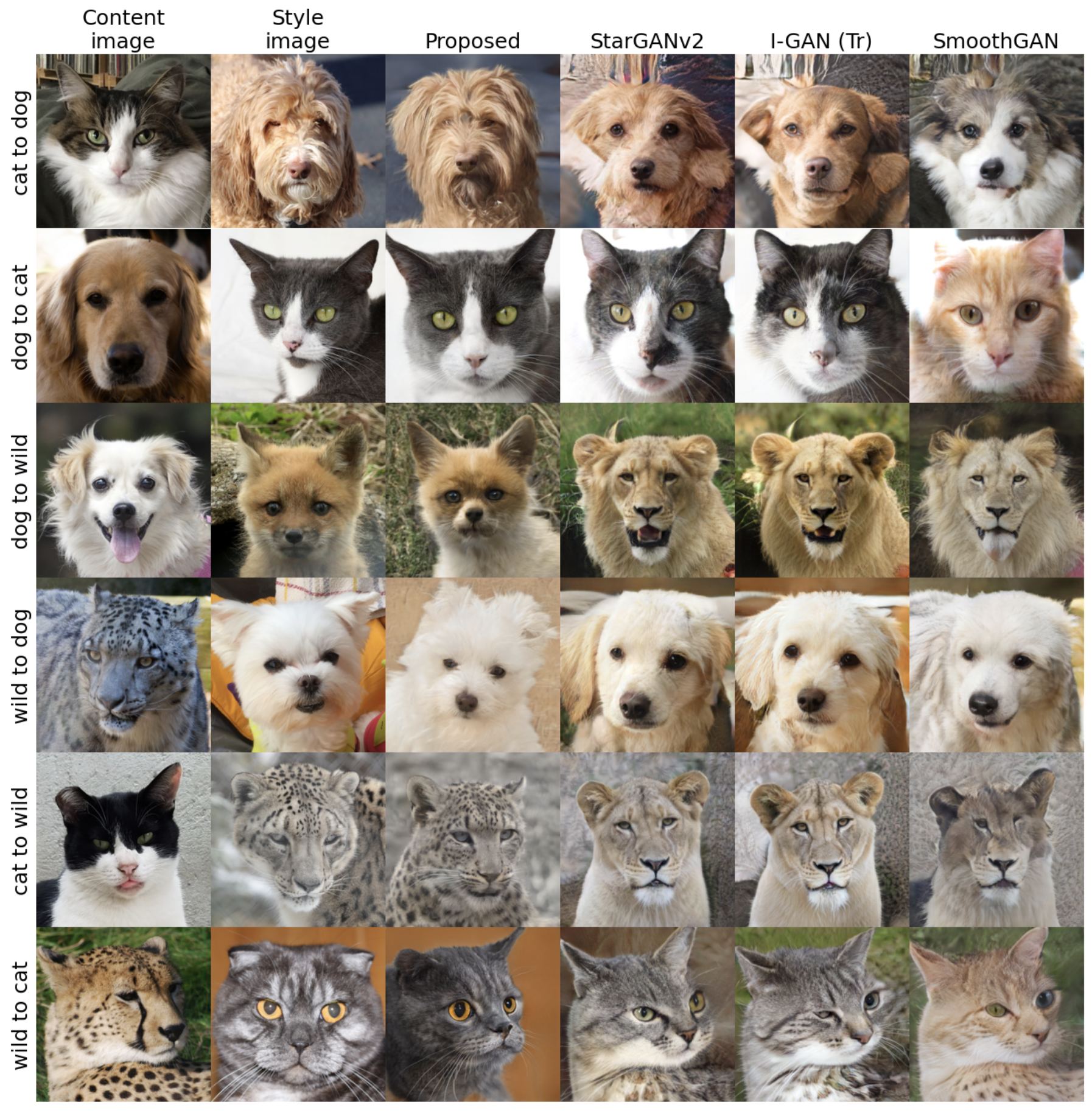
Unsupervised domain translation is the problem of learning a mapping between two domains without paired data. Existing methods generally tackle the problem with distribution matching objectives. A fundamental issue with these approaches is the "non-identifiability" of translation maps due to the existence of multiple solutions. Our work proposes a simple yet provable solution to address this issue.

OCT Super-Resolution

Translation Identifiability-Guided Unsupervised Cross-Platform Super-Resolution for OCT Images

Jiahui Song*, Sagar Shrestha*, Xueshen Li, Yu Gan, and Xiao Fu (* Equal Contribution)

IEEE SAM Workshop 2024

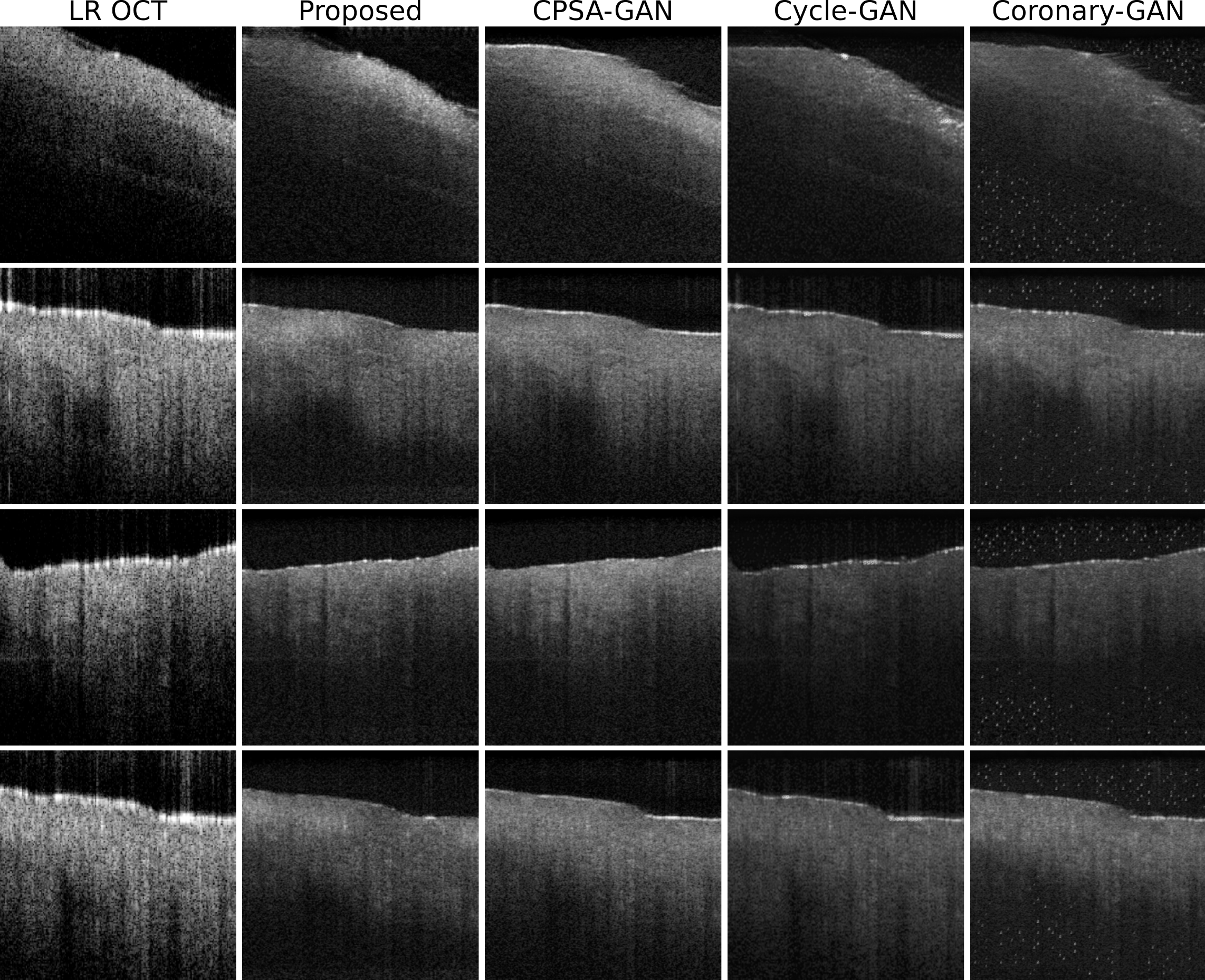
Optical Coherence Tomography (OCT) provides detailed cross-sectional images of coronary arteries, but cost-effective systems produce only low-resolution images. Our work proposes a translation identifiability-guided framework using a diversified distribution matching module for OCT super-resolution.

Joint Beamforming

Optimal Solutions for Joint Beamforming and Antenna Selection: From Branch and Bound to Graph Neural Imitation Learning

Sagar Shrestha, Xiao Fu, Mingyi Hong

IEEE Transactions on Signal Processing (TSP) 2023

Joint Beamforming and Antenna selection is a mix of non-convex continuous and combinatorial optimization problem. We address this issue by first proposing an optimal Branch and Bound (B&B) algorithm for the problem. To address the potential scalability issue of the B&B, we propose a GNN based policy learnt via imitation learning.

Communication-efficient Federated GCCA

Communication-efficient Federated Linear and Deep Generalized Canonical Correlation Analysis

Sagar Shrestha, Xiao Fu

IEEE Transactions on Signal Processing (TSP) 2023

Classic and deep learning-based GCCA algorithms seek low-dimensional common representations of data entities from multiple "views" (e.g., audio and image) using linear transformations and neural networks, respectively. This work puts forth a convergence-guaranteed communication-efficient federated learning framework for both linear and deep GCCA under the Maximum Variance (MAX-VAR) formulation.

Quantized Radio Map Estimation

Quantized Radio Map Estimation Using Tensor and Deep Generative Models

Subash Timilsina, Sagar Shrestha, Xiao Fu, Mingyi Hong

IEEE Transactions on Signal Processing (TSP) 2023

Spectrum cartography (SC), also known as radio map estimation (RME), aims at crafting multi-domain (e.g., frequency and space) radio power propagation maps from limited sensor measurements. This work puts forth a quantized SC framework that generalizes the BTD and DGM-based SC to scenarios where heavily quantized sensor measurements are used.

Deep Spectrum Cartography

Deep Spectrum Cartography: Completing Radio Map Tensors Using Learned Neural Models

Sagar Shrestha, Xiao Fu, Mingyi Hong

IEEE Transactions on Signal Processing (TSP) 2022

The spectrum cartography (SC) technique constructs multi-domain (e.g., frequency, space, and time) radio frequency (RF) maps from limited measurements, which can be viewed as an ill-posed tensor completion problem. In this work, an emitter radio map disaggregation-based approach is proposed, under which only individual emitters radio maps are modeled by DNNs.

Blogs

Unified Perspective on Flow Matching
Oct 4, 2024

Unified Perspective on Diffusion and Flow Matching

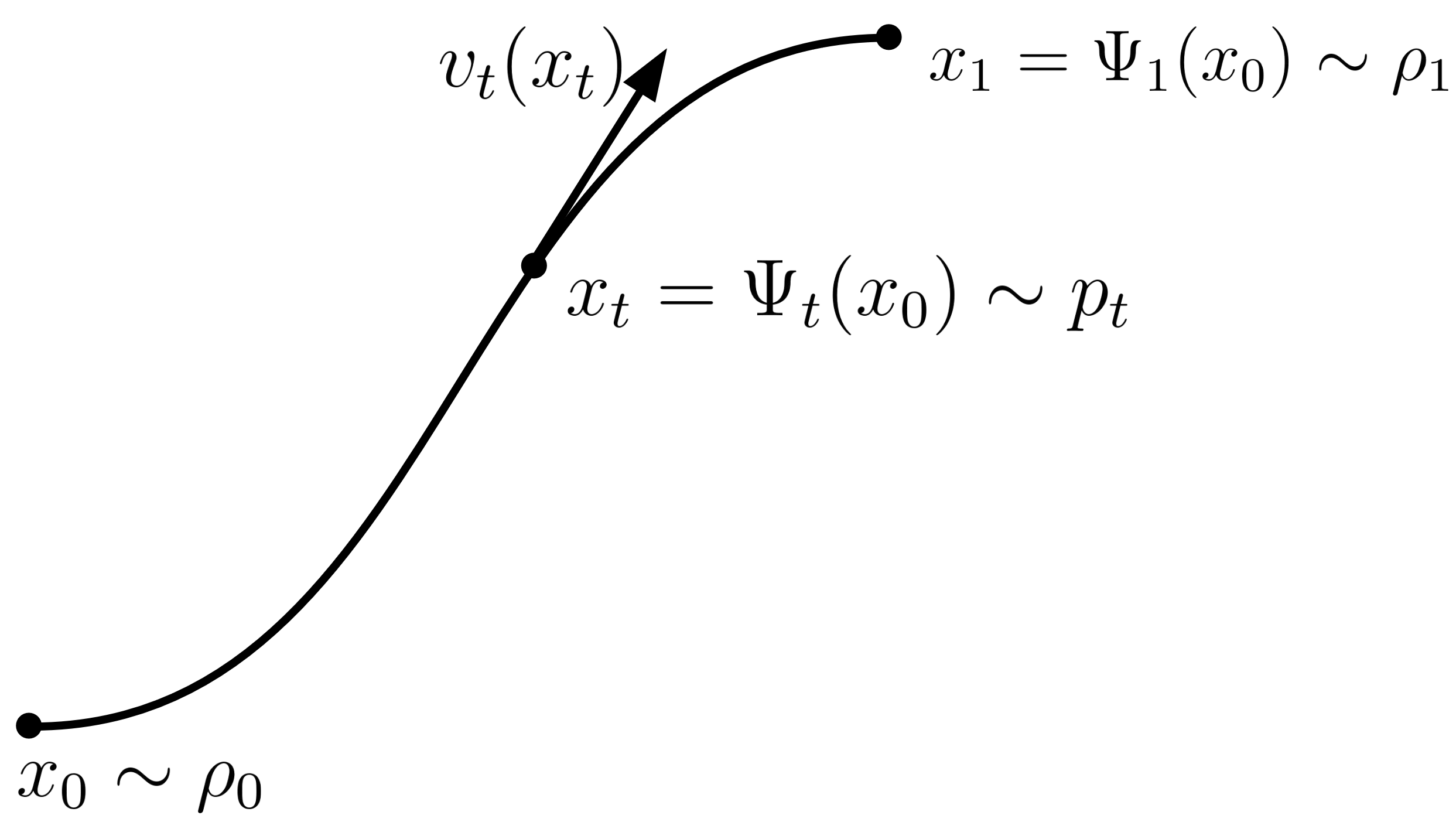
A note on how to view flow matching and diffusion under the same framework, resulting in great flexibility in designing probability path, training score or vector field, and sampling using SDE or ODE.
Optimal Solutions for Diffusion
Sept 3, 2024

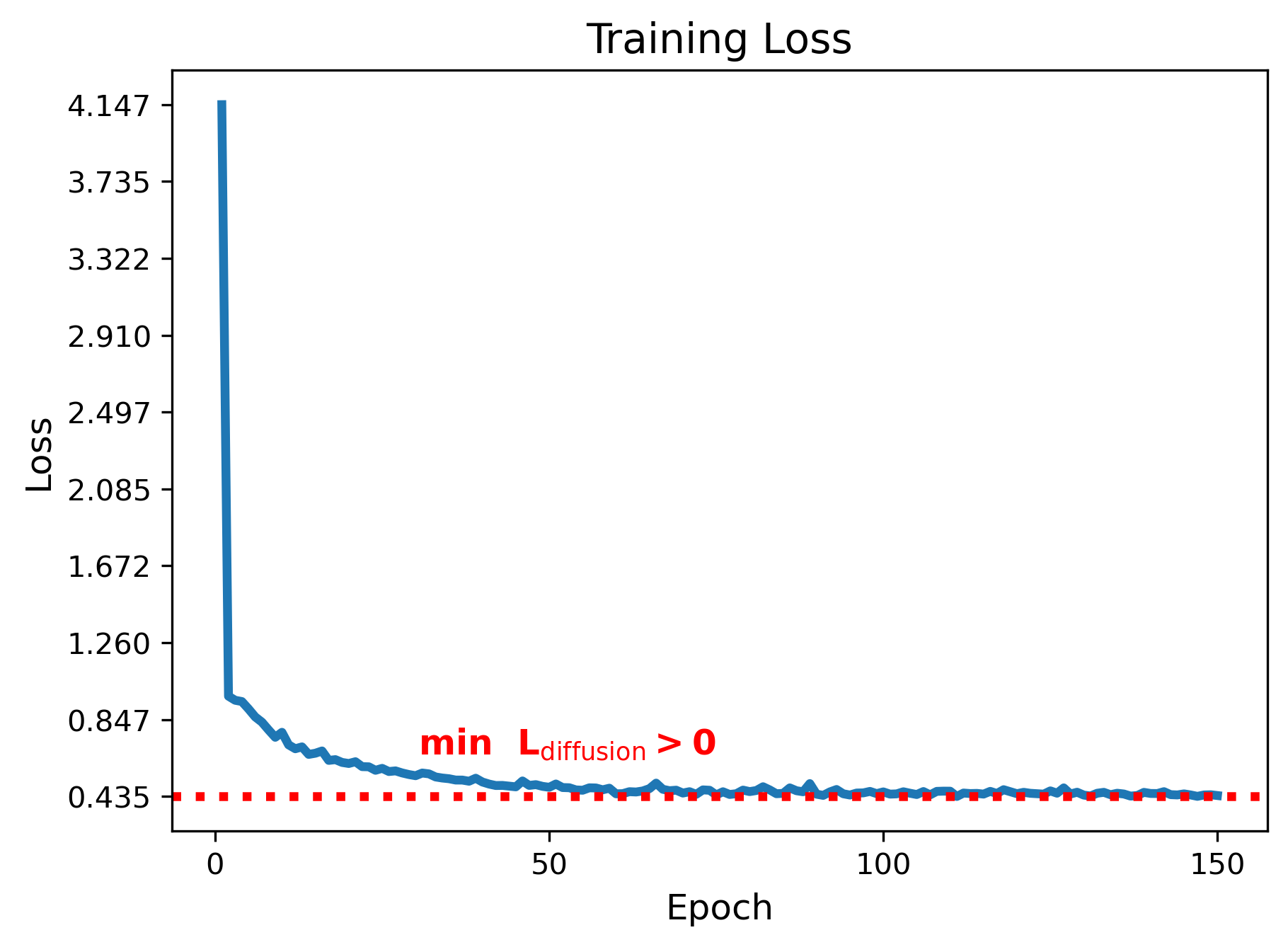
Optimal Solutions for Diffusion and Flow Matching Objectives

A short note on understanding the diffusion and flow matching objectives and their solutions.

Vision Language Models
June 28, 2024

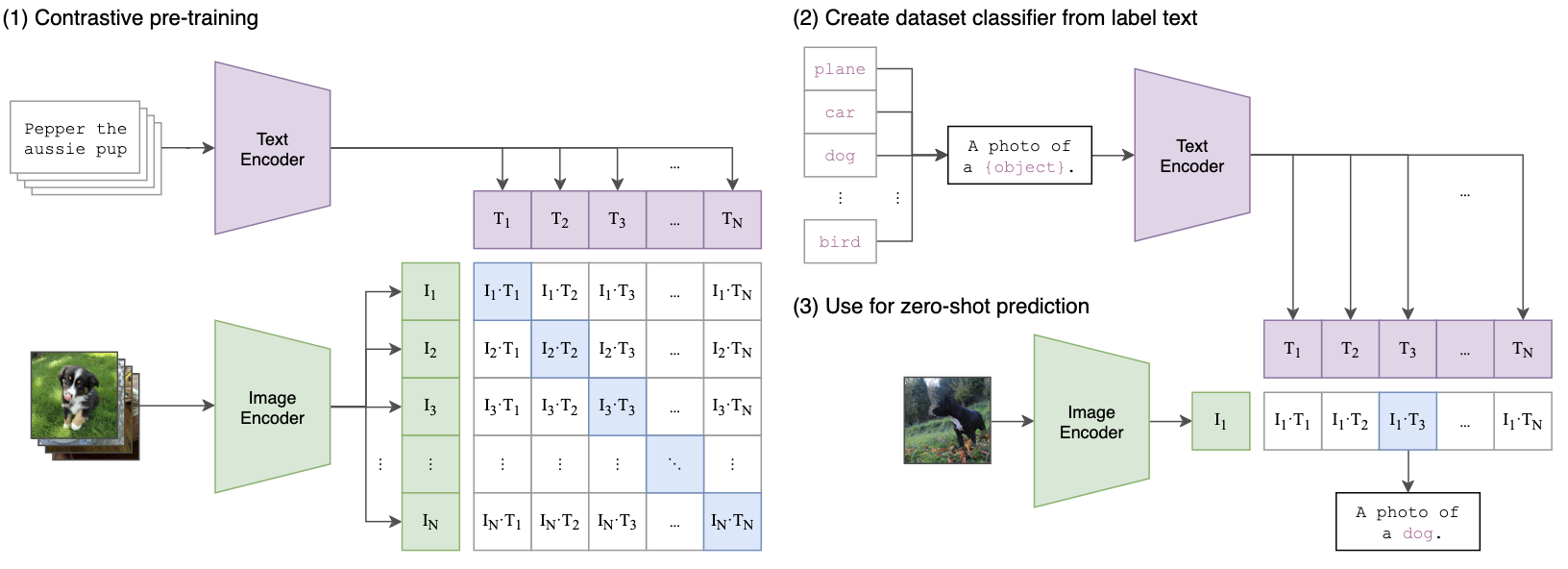
Vision Language Representation Learning

A brief survey into joint representation learning of text and images.

Flow Matching
February 20, 2024

Understanding Flow Matching-based Generative Models

A distilled explanation of the flow matching / stochastic interpolant /rectified flow. It features an easy-to-follow proof (not found in original paper) of the flow-matching objective with stochastic interpolants.

Independent Component Analysis
October 29, 2023

A High Schooler's Guide to Independent Component Analysis

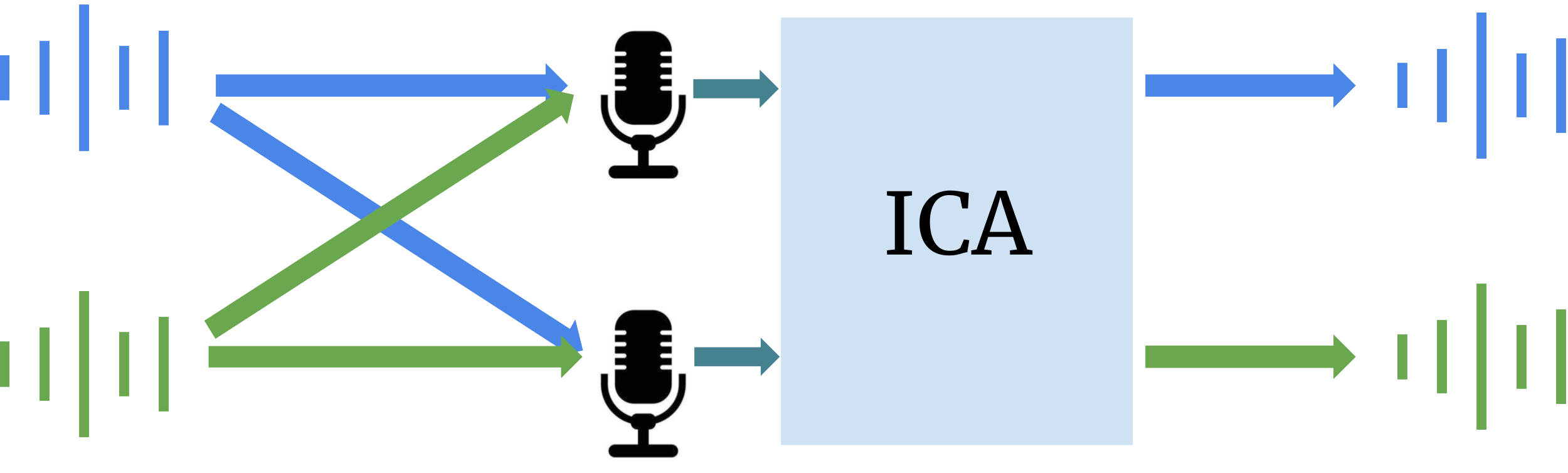
A beginner's introduction to ICA.